

Table of Contents
- What Actually Matters When Choosing Mouth Tape for Nightly Use
- Is Mouth Taping Safe to Do Every Night?
- How to Use Mouth Tape for Sleep Without Wrecking Your Routine
- Mouth Tape for Sensitive Skin: What to Check Before You Buy
- Waking Up With Dry Mouth While Mouth Taping: Causes and Fixes
- Common Mistakes That Make Nightly Mouth Tape Fail
- How to Compare Mouth Tape Options Before You Commit
- Frequently Asked Questions
Last Updated: October 18, 2026
What Actually Matters When Choosing Mouth Tape for Nightly Use
Mouth tape is a small adhesive strip worn over the lips at night to encourage nasal breathing and reduce snoring. Mouth tape is a small adhesive strip worn over the lips at night to encourage nasal breathing and reduce snoring, and the best mouth tape for nightly use comes down to three things: skin tolerance, adhesive strength, and fit.

Get those wrong and the tape ends up in the bin by 2am.
Most buyers focus on price per strip. That is the least important factor. A tape that irritates your skin after three nights is expensive at any price, because you stop wearing it. Nightly use is a commitment, and the product has to survive that commitment.
Here is what separates tape you can wear every night from tape you cannot:
- Hypoallergenic adhesive that releases cleanly from skin, even over facial hair
- Gentle removal so the lips and surrounding skin are not pulled raw
- Consistent stick through eight hours without slipping or leaving residue
- Breathable material that does not trap heat or moisture
The best mouth tape for nightly use is the one you forget you are wearing. Everything else is marketing.
Is Mouth Taping Safe to Do Every Night?
Mouth taping is generally safe for healthy adults when the nose is clear and the tape is applied correctly, but it is not suitable for everyone. The main risk is not the tape itself. It is taping when your airway is already compromised.
If you have been diagnosed with obstructive sleep apnoea, speak to your treating doctor before taping. Mouth tape is not a treatment for sleep apnoea and should never replace prescribed therapy such as CPAP or an oral appliance. It can sit alongside those tools, but only with medical guidance.
Skip mouth taping entirely if you:
- Have a blocked or congested nose
- Are recovering from nasal surgery
- Have a respiratory condition affecting breathing
- Have consumed alcohol or sedatives before bed
- Are vomiting or feeling unwell
For everyone else, nightly taping is a low-risk habit. Start with a few nights a week and build up. If you wake with headaches, breathlessness, or persistent fatigue, stop and get checked. The Sleep Health Foundation's guidance on sleep disorders is a sensible starting point for understanding when snoring needs medical attention.
How to Use Mouth Tape for Sleep Without Wrecking Your Routine
Applying mouth tape takes about ten seconds once it becomes habit. The trick is building it into your existing wind-down, not treating it as a separate ritual you have to remember.
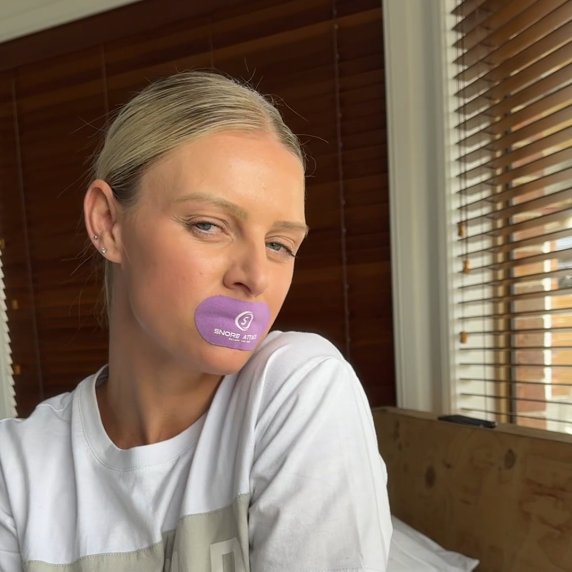
Here is the routine we recommend:
- Clear your nose first. Blow your nose and check you can breathe freely through both nostrils. If you cannot, skip the tape tonight.
- Cleanse and dry the skin. Wash your face and pat the area around your mouth completely dry. Moisturiser and oils stop the adhesive working.
- Apply the strip. Press a single strip over the centre of your lips, sealing the mouth without stretching the skin.
- Test your breathing. Breathe through your nose for a minute before lying down. If it feels restricted, remove the tape.
- Remove gently in the morning. Peel slowly from one corner, working along the lip line.
Keep the packet and a spare strip on the bedside table. If the tape comes loose at 3am, you want a replacement within arm's reach, not a walk to the bathroom cupboard.
Mouth Tape for Sensitive Skin: What to Check Before You Buy
Sensitive skin is the number one reason people give up on mouth tape. The fix is choosing the right adhesive and testing it before committing to a full night.
Look for tape explicitly described as hypoallergenic and gentle to remove. Avoid anything with strong fragrances or harsh adhesives, which are the usual culprits behind redness and irritation.
Run a patch test first. Stick a small piece of tape to your inner forearm and leave it for a few hours. If there is no redness or itching, try a short overnight wear on your face before going the full eight hours.
Signs the tape is not right for your skin:
Shop our range of anti-snoring products →
- Redness or raised welts where the tape sat
- Stinging during removal
- Dry, flaky patches around the mouth
- Itching that keeps you awake
Snore Attack Mouth Tape is hypoallergenic and designed to be gentle on removal, even if you have a beard or moustache. That matters for nightly use, because the removal step, not the application, is what usually damages skin over time. A pack contains 30 pieces, and we sell them in lots of 3, 6 and 12 so you can trial a smaller quantity before committing.
Waking Up With Dry Mouth While Mouth Taping: Causes and Fixes
Waking up with dry mouth while mouth taping usually means air is still getting in, or your nose is not doing its job. The tape is meant to keep the mouth sealed. If your mouth is dry, something in the chain has failed.
The most common causes:
- The tape lifted overnight. Oils, moisturiser, or a poor seal let air escape through the lips.
- Nasal congestion. A blocked nose forces mouth breathing, and the tape cannot fix that.
- You are a side or stomach sleeper. Pillow friction can peel the edges loose.
- Room air is too dry. Heating and air conditioning strip moisture from the air.
Fixes worth trying: cleanse the skin thoroughly before applying, press the strip down firmly, and consider a humidifier if your bedroom air is dry. If congestion is the issue, address that first. Many people find a nasal dilator helps open the airway so nasal breathing becomes comfortable enough for the tape to do its job. Snore Attack's range includes magnetic nasal dilators designed to work alongside mouth tape for exactly this reason.
If dry mouth persists despite a good seal, mention it to your dentist. Chronic dry mouth affects oral health over time (Dry mouth syndrome - symptoms, causes and treatment).
Common Mistakes That Make Nightly Mouth Tape Fail
The biggest mistake is buying on price alone and ending up with an adhesive that irritates your skin or fails to stick. Nightly use exposes every weakness in a product, fast.
Here is what we see go wrong most often:
- Applying over moisturiser. The tape will not bond to oily or moisturised skin. Cleanse and dry first.
- Using too large a strip. You only need enough to seal the lips. Oversized strips pull at the skin and are harder to remove.
- Ignoring nasal health. Taping a blocked nose is pointless and uncomfortable. Fix the nose first.
- Skipping the patch test. A reaction on night one is avoidable.
- Wearing the same strip twice. Single-use means single-use. A fresh strip sticks properly and removes cleanly.
How to Compare Mouth Tape Options Before You Commit
Comparing mouth tape comes down to four practical checks: adhesive type, removal gentleness, pack size, and cost per night. Everything else is secondary.
Use this checklist before you buy:
- Is the tape described as hypoallergenic?
- Does the listing confirm gentle removal, including over facial hair?
- How many pieces per pack, and what is the cost per night?
- Can you buy a smaller lot to trial before committing?
- Does the brand offer complementary products for nasal breathing?
| What to Check | Why It Matters | What Good Looks Like |
|---|---|---|
| Adhesive type | Prevents skin irritation | Hypoallergenic, fragrance-free |
| Removal | Protects skin night after night | Peels cleanly, gentle on facial hair |
| Pack size | Lets you trial before committing | Small lots available |
| Cost per night | Long-term value | Clear per-piece pricing |
| Range support | Solves nasal breathing too | Nasal dilators available |
Snore Attack Mouth Tape is $18.99 for a pack of 30, which works out at $0.19 per piece on a 12-month subscription purchase. For nightly use, that is a low-cost way to test whether taping suits you.
Nightly mouth taping only works if the tape is comfortable enough to wear every single night, and that comes down to skin-friendly adhesive and a secure seal. Snore Attack stocks hypoallergenic mouth tape that is gentle to remove even over facial hair, plus magnetic nasal dilators to support nasal breathing and cleaning tablets for oral appliances. Start with a smaller pack, build the habit, and see how you sleep. Shop the Snore Attack range and make tonight the first night you breathe easier.
Frequently Asked Questions
What is the best mouth tape for nightly use?
Look for three things: a hypoallergenic adhesive, gentle removal that won't pull at skin or facial hair, and a size that covers the lips without restricting jaw movement. Snore Attack Mouth Tape is hypoallergenic and designed for gentle removal, even if you have a beard or moustache. It comes in packs of 30 pieces at $18.99, or $0.19 per piece on a 12-month subscription, which suits people who plan to wear it every night rather than occasionally.
Is it safe to use mouth tape every night?
For most healthy adults who can breathe comfortably through their nose, nightly use is generally well tolerated. It is not suitable if you have a blocked nose, a cold or sinus infection, or if you have been diagnosed with obstructive sleep apnoea without discussing it with your doctor first. Stop using it if you feel short of breath or panicked. If you are unsure whether mouth taping is safe for your situation, speak to your GP before starting.
What can I do if I wake up with a dry mouth while mouth taping?
Dry mouth while mouth taping usually means air is still getting in, either through a loose seal or because your nose is partly blocked. Check that the tape is sitting flat across your lips with no gaps at the corners. Try clearing your nose before bed, and keep water nearby. If dryness continues, the tape may be too small or your nasal airflow may need attention, so it is worth reviewing your set-up rather than pushing through.
Should I speak to a doctor before trying mouth tape?
Yes, if you have been diagnosed with obstructive sleep apnoea, use a mandibular advancement device, or have any ongoing breathing or heart condition. Mouth tape is a comfort and habit tool, not a treatment for sleep apnoea. Your doctor can tell you whether it is appropriate alongside your existing therapy. If you snore heavily and feel exhausted during the day, get assessed before relying on any over-the-counter product.