

Table of Contents
- How Nasal Dilators Improve Breathing and Sleep Quality
- Nasal Strips vs Nasal Dilators: Which Works Better for You
- Magnetic Nasal Dilators for Sleep: How They Work
- How to Stop Snoring Naturally With Nasal Dilators
- Nasal Dilator Benefits for Sleep Apnoea and Breathing Disorders
- Choosing the Right Nasal Dilator: Size, Comfort, and Fit
- Conclusion: Making Nasal Dilator Use Part of Your Sleep Routine
- Frequently Asked Questions
Last Updated: 4 October 2026
How Nasal Dilators Improve Breathing and Sleep Quality
Nasal dilator use opens your nasal passages mechanically, allowing more air to flow through your nose when you breathe. This simple physical change can transform your sleep quality by reducing the effort your body expends to draw each breath. When your nasal airway is narrowed, whether from anatomy, congestion, or the natural collapse that happens when you lie flat, your body has to work harder to pull air in (pubmed.ncbi.nlm.nih.gov). Nasal dilators address this directly.
Many people struggle with mouth breathing at night, which disrupts sleep architecture and often triggers snoring. The moment you switch to nasal breathing with the help of a dilator, two things happen: your airway resistance drops, and your brain receives better oxygen saturation signals. This means fewer micro-arousals, those brief, partial awakenings that fragment sleep without you realising it.
The mechanism is straightforward but effective. Magnetic nasal dilators like the Snore Attack Magnetic Nasal Clips - Starter Pack use gentle outward pressure to hold the nasal sidewalls open. This prevents the soft tissue collapse that narrows your airway when you're supine. The result is measurable: easier breathing, less snoring, and deeper sleep cycles.

Most people notice a difference within the first few nights. Your sleep may feel less interrupted, and you may wake fewer times during the night. These improvements can contribute to more restorative sleep.
Nasal Strips vs Nasal Dilators: Which Works Better for You
Nasal strips and nasal dilators both aim to open your airway, but they work in fundamentally different ways. Understanding the distinction helps you choose what actually suits your situation.
Nasal strips are adhesive bandages that stick across the bridge of your nose and use elastic tension to pull the nasal sidewalls outward. They're non-invasive, require no fitting, and work immediately. However, they rely entirely on the adhesive staying put, and for many people, the adhesive irritates sensitive skin or fails to hold through the night.
Nasal dilators, by contrast, sit inside or just inside your nostrils and use gentle pressure or magnetic force to hold your airway open from within. The Snore Attack Magnetic Nasal Clips use a magnetic system with adhesive strips that attach to your nose, offering a more secure hold than traditional strips. Because they're positioned inside the nostril, they're less affected by skin oils or sweat, and many users find them more comfortable for all-night wear.

The trade-off is fitting. Nasal strips work for everyone immediately. Magnetic nasal dilators require you to find your correct size, the Starter Pack includes four sizes specifically for this reason. Once you've found your fit, consistency improves significantly.
For people with sensitive skin who've had bad reactions to adhesive strips, magnetic dilators are often the better choice. For those who want zero setup and maximum simplicity, strips might appeal. The honest answer: dilators can be effective for chronic snoring and sleep-disordered breathing, whilst strips work well for mild, occasional congestion.
Magnetic Nasal Dilators for Sleep: How They Work
Magnetic nasal dilators function through a deceptively simple principle: two small magnetic clips positioned at the entrance of each nostril create a gentle outward pull that prevents airway collapse. When you lie down, the soft tissue in your nasal passages naturally wants to relax inward.
The Snore Attack Magnetic Nasal Clips use medical-grade adhesive strips to secure the clips to your nose. The magnetic connection is calibrated to provide enough force to hold your airway open throughout the night without causing discomfort or irritation.
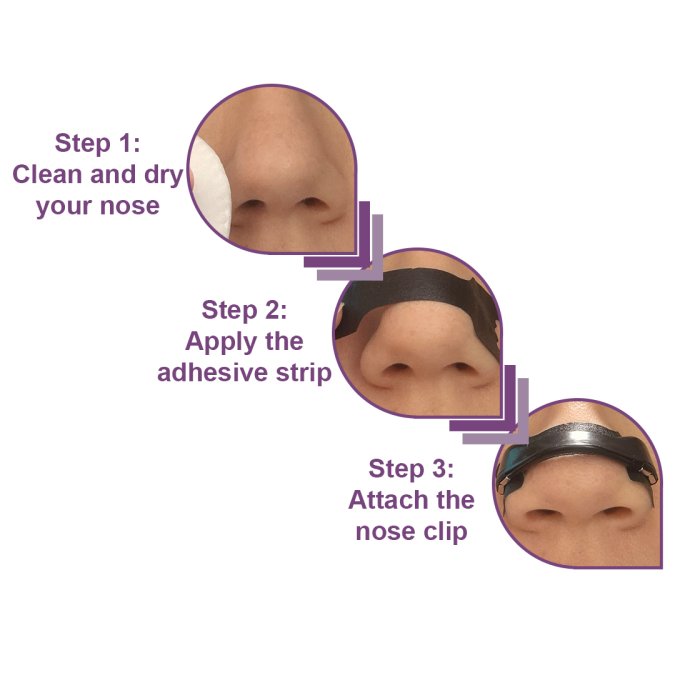
The Starter Pack includes 15 magnetic adhesive strips. The Snore Attack Magnetic Nasal Strips - Refill Pack provides 30 strips, extending your supply to a full month.
What makes magnetic dilators effective for sleep is consistency. Unlike nasal strips that can shift or lose adhesion partway through the night, the magnetic connection remains stable. Your airway stays open, your breathing stays nasal, and your sleep stays uninterrupted. Many users report that the clips can feel more natural over time.
The sizing is critical. Too small, and the clips don't provide enough outward pressure. Too large, and they feel uncomfortable or unstable.
How to Stop Snoring Naturally With Nasal Dilators
Snoring happens when air turbulence in your narrowed airway causes soft tissue vibration. The narrower your nasal passage, the faster air moves through it, and the more your tissues vibrate. This vibration is the sound you hear, and what keeps your partner awake.
Nasal dilators address snoring at its source by widening your airway. Wider airway equals slower airflow equals less vibration. It's not a temporary fix that masks the problem; it's a mechanical solution that removes the cause.
The process works like this: when you apply magnetic nasal dilators before bed, they immediately reduce airway resistance. Your body doesn't have to force air through a narrow space anymore. Within the first night, many people may notice a reduction in snoring. Consistent use can lead to noticeable improvements.
What makes nasal dilator use effective for snoring is that it works without medication, surgery, or oral appliances. You're simply improving airflow mechanically. This approach is particularly valuable if you've tried other methods, sprays, rinses, positional pillows, that didn't stick or didn't work. Nasal dilators require no habit formation, no daily routine beyond applying clips before sleep.
The natural aspect matters too. You're not altering your body chemistry or relying on devices that reshape your jaw or block your airway. You're opening it. This makes nasal dilators a gentle, reversible approach to snoring reduction.
Nasal Dilator Benefits for Sleep Apnoea and Breathing Disorders
Sleep apnoea involves repeated partial or complete airway collapse during sleep, causing breathing interruptions that jolt you awake. Obstructive sleep apnoea (OSA) is the most common form, your airway physically narrows or closes, stopping airflow until your brain signals you to wake and breathe (Sleep Apnea - What Is Sleep Apnea?).
Shop our range of anti-snoring products →
Nasal dilators alone do not treat sleep apnoea. If you've been diagnosed with OSA by a doctor, you need proper medical treatment, typically a CPAP machine, oral appliance, or in some cases, surgery. Nasal dilators can be a supporting tool, not a replacement.
However, many people with mild sleep apnoea or hypopnoea (shallow breathing) find that nasal dilators reduce the frequency of events. By improving nasal airflow, you reduce the work your airway has to do to stay open.
The key distinction: if your sleep apnoea is severe or primarily caused by throat tissue collapse rather than nasal narrowing, nasal dilators won't resolve it. If your apnoea is mild-to-moderate and you're already using a CPAP or oral appliance, nasal dilators can improve comfort and effectiveness by making nasal breathing easier.
Many people using mandibular advancement devices (oral appliances that reposition your jaw forward) find that nasal dilators complement their treatment well. Your jaw appliance handles throat-level airway collapse; nasal dilators handle nasal-level airflow. Together, they address both mechanisms.
Always discuss nasal dilator use with your sleep physician if you have a diagnosed breathing disorder. They can advise whether they're appropriate for your specific condition and how they fit into your overall treatment plan.
Choosing the Right Nasal Dilator: Size, Comfort, and Fit
The most common reason people abandon nasal dilators is poor fit. Too small, and they don't work. Too large, and they're uncomfortable. Getting this right transforms the product from frustrating to invisible.
The Snore Attack Magnetic Nasal Clips - Starter Pack includes four clip sizes specifically to solve this problem. Start with the smallest size and work your way up until you find the size that holds your airway open without causing discomfort or a sensation of pulling. Most people find their fit within the first two or three nights.
Signs you've found the right size:
- You forget you're wearing them within 10-15 minutes
- Your breathing feels noticeably easier
- There's no pinching or pulling sensation
- The clips stay in place all night without shifting
Signs your size is wrong:
- Persistent discomfort or a tugging feeling
- The clips slip out during the night
- Your airway doesn't feel noticeably more open
- You're aware of them hours into sleep (they should fade into the background)
Comfort also depends on the adhesive strips. The magnetic strips included in the Starter Pack are designed to be comfortable, but if you have particularly reactive skin or a history of adhesive sensitivity, test on a small area first. If irritation occurs, discontinue use. The strips should feel secure but not so tight that they restrict blood flow or cause redness.
Storage matters too. The Starter Pack includes a storage case specifically designed to protect your clips and keep them clean between uses. This extends the life of your clips and ensures they're ready to use each night.
One practical note: if you're combining nasal dilators with mouth tape (another effective approach for nasal breathing), apply the dilators first, then the tape. This ensures your nasal passages are fully open before you commit to nasal-only breathing.
Conclusion: Making Nasal Dilator Use Part of Your Sleep Routine
Nasal dilator use is one of the most straightforward, non-invasive approaches to improving sleep quality and reducing snoring. By mechanically opening your nasal airway, you eliminate the root cause of many breathing disruptions, and your sleep transforms as a result.
The Snore Attack Magnetic Nasal Clips - Starter Pack gives you everything you need to find your fit and experience the difference within days. With four sizes, 15 adhesive strips, and detailed fitting instructions, you can match your nasal anatomy precisely and start breathing easier tonight. For ongoing use, the Refill Pack ensures you always have fresh strips on hand.
Whether you're struggling with snoring, mouth breathing, or simply want to optimise your sleep quality, nasal dilators deserve a place in your sleep toolkit. Shop the Snore Attack range today and discover why many Australians have made nasal dilators part of their nightly routine.
Frequently Asked Questions
Do nasal dilators actually work for snoring?
Nasal dilators work by opening the nasal passages to improve airflow, which can reduce snoring caused by nasal obstruction. They're most effective for people whose snoring stems from difficulty breathing through the nose rather than other causes. Results vary depending on the underlying reason for snoring, but many users report noticeable improvements in sleep quality and reduced snoring within the first few nights of use.
What is the difference between nasal strips and nasal dilators?
Nasal strips are adhesive bands that pull the nostrils open externally from the outside of the nose, whilst nasal dilators like the Snore Attack Magnetic Nasal Clips use magnetic support or internal props to hold the nasal passages open from within. Dilators generally provide more targeted support and can be adjusted for fit, whilst strips offer a simpler, one-size-fits-most approach. Both reduce nasal resistance, but dilators often provide firmer, more customisable support.
Can nasal dilators help with obstructive sleep apnoea?
Nasal dilators can provide supportive benefit for mild obstructive sleep apnoea by improving nasal airflow, but they should not replace medical treatment prescribed by your doctor. If you've been diagnosed with sleep apnoea, nasal dilators work best as a complementary tool alongside your primary therapy. Always consult your healthcare provider before relying on nasal dilators as your sole treatment for diagnosed sleep disorders.
How quickly will I notice a difference with nasal dilator use?
Many users report improved breathing and reduced snoring within the first night or two of use. However, full adjustment to wearing a nasal dilator and consistent results typically develop over the first week as your body adapts. Comfort and effectiveness improve as you find the right fit and size for your nose, so persistence through the initial adjustment period often yields the best outcomes.