

Table of Contents
- What Makes Mouth Tape Suitable for Sensitive Skin
- Hypoallergenic Mouth Tape: Materials That Won't Trigger Reactions
- Mouth Tape for Sensitive Skin and Lips: Key Features to Look For
- How to Remove Mouth Tape Without Irritation
- Mouth Taping Safety: What You Should Know Before Starting
- Common Mistakes That Lead to Skin Irritation
- Frequently Asked Questions
Last Updated: October 5, 2026
What Makes Mouth Tape Suitable for Sensitive Skin
Finding the right mouth tape when you have sensitive skin requires understanding what actually triggers irritation. The best mouth tape for sensitive skin prioritises hypoallergenic materials, gentle adhesives, and easy removal without leaving residue or causing redness.
Sensitive skin reacts to harsh chemicals, strong adhesives, and rough textures. When you're taping your mouth nightly, those minor irritants compound. A product designed for sensitive skin eliminates these culprits from the start.
The key difference between standard mouth tape and options for sensitive skin lies in the adhesive formulation and backing material. Standard tapes often use stronger adhesives that grip fiercely, useful for all-day wear on strong skin, but problematic when your skin is reactive. Sensitive-skin formulations use gentler adhesives that still seal effectively but release without tugging or leaving sticky residue.
At Snore Attack, we understand this challenge directly. Our Mouth Tape is hypoallergenic and designed to be gentle to remove, even if you have a beard or moustache. This matters because removal is where most skin irritation actually occurs, not during wear, but when you peel the tape away.

Your skin barrier is thinner and more reactive when you're sensitive. It needs a product that respects that reality rather than fighting against it.
Hypoallergenic Mouth Tape: Materials That Won't Trigger Reactions
Hypoallergenic mouth tape uses materials and adhesives screened to minimise allergic responses. This doesn't mean the tape is completely allergen-free, nothing is, but it excludes the most common irritants that trigger reactions in reactive skin.
The backing material matters as much as the adhesive. Quality hypoallergenic tape typically uses non-woven fabric or soft cotton-blend materials rather than plastic or synthetic polymers. These breathe slightly, allowing skin to maintain some moisture exchange rather than creating an airtight seal that suffocates the area underneath.
The adhesive in hypoallergenic formulations is usually acrylic-based rather than rubber-based. Rubber adhesives trigger reactions more frequently in sensitive individuals. Acrylic adhesives bond effectively but release cleanly without leaving gummy residue that requires rubbing or solvents to remove.
Look for tapes that explicitly state they're free from common irritants: latex, PVC, phthalates, and heavy fragrances. Some products add soothing ingredients like aloe or chamomile extract, though these are secondary to the core hypoallergenic formulation, the absence of irritants matters more than the presence of soothing additions.
When you're choosing a hypoallergenic option, check whether the manufacturer has conducted patch testing or holds certifications from dermatological bodies. This signals they've invested in proving their claims rather than simply marketing to the sensitive-skin category.
Mouth Tape for Sensitive Skin and Lips: Key Features to Look For
Selecting the best mouth tape for sensitive skin and lips means evaluating specific features beyond just "hypoallergenic." Your lips are particularly vulnerable, thinner skin, constant movement during sleep, and exposure to saliva all create conditions where irritation escalates quickly.
Softness and flexibility matter more than you might expect. Rigid tape that doesn't flex with your mouth creates pressure points. As you move your mouth during sleep, rigid tape pulls and tugs. Flexible backing that moves with your lips prevents this constant micro-trauma.
Adhesive strength balance is critical. Too weak and the tape fails, you're wasting money and defeating the purpose. Too strong and removal becomes painful. For sensitive skin, you want adhesive that holds firmly during the night but releases at a gentle peel rather than requiring forceful removal.
Size and shape affect comfort significantly. Wider tape distributes pressure across more surface area, reducing the concentrated force on any single spot. Some people find smaller, narrower strips more comfortable because they feel less restrictive. This is individual, but the option to find what suits your mouth shape matters.
Breathability is underrated. Mouth tape that allows minimal air exchange creates a moist microclimate underneath, which accelerates irritation. Better products use materials that allow some moisture to escape while still maintaining the seal. This keeps the skin underneath drier and less reactive.
Ease of removal should be obvious from product descriptions. Look for language about "gentle removal," "no residue," or "designed for sensitive skin." Snore Attack Mouth Tape specifically mentions being gentle to remove even with facial hair, a practical detail that signals attention to the removal experience.
Check the quantity per pack and cost per piece. Mouth tape is a consumable, so you'll use it nightly. A pack of 30 pieces at $18.99 works out to roughly $0.19 per piece on a subscription basis, making it sustainable for regular use.
How to Remove Mouth Tape Without Irritation
Removal is where most skin damage occurs. You're tired, your skin has been sealed for eight hours, and the tape has set firmly. Rushing this step causes redness, micro-tears, and irritation that discourages you from using tape again.
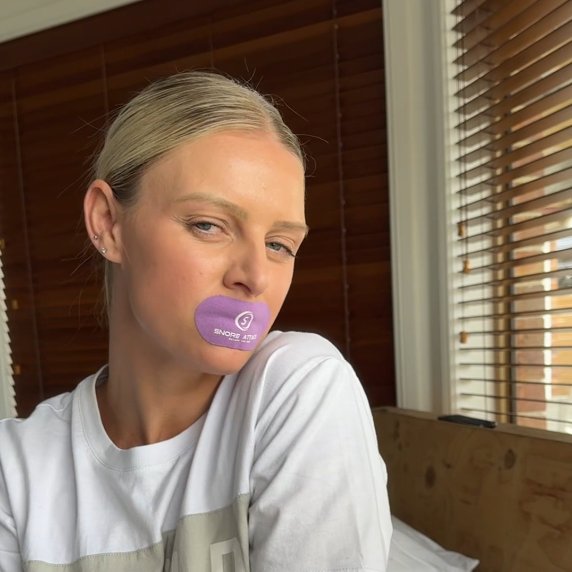
Start while your skin is still slightly moist. Don't wait until your mouth is completely dry. Immediately after waking, your lips and the surrounding skin still have some residual moisture from sleep and saliva. This moisture acts as a lubricant that helps the tape release more easily. If you wait thirty minutes and your skin dries completely, removal becomes harder.
Peel slowly from one corner, not straight down. Pulling the tape directly downward concentrates force on the centre of your lips. Instead, gently lift one corner and peel at a shallow angle. Let gravity and the slow peel do the work rather than using force. This distributes the removal stress across a wider area and takes longer, which is exactly what sensitive skin needs.
Use one hand to support the skin. Place your other hand on the skin just below the tape edge and gently hold the skin taut as you peel. This prevents the skin from stretching excessively as the tape releases. You're essentially anchoring the skin so the tape peels away from stable tissue rather than pulling the skin with it.
Avoid water immediately after removal. Your skin is slightly irritated from the tape's adhesive and the removal process. Splashing water on it, especially hot water, can intensify redness and sensitivity. Wait five to ten minutes before washing your face. This gives your skin barrier a moment to settle.
Shop our range of anti-snoring products →
Don't use solvents or oils to remove residue. If adhesive residue remains, resist the urge to rub it off with oil or alcohol-based products. These can irritate sensitive skin further. Instead, let the residue dry completely and gently roll it off with your finger. It will ball up and come away cleanly without additional friction.
Mouth Taping Safety: What You Should Know Before Starting
Mouth tape is a simple tool, but using it safely requires understanding its limitations and knowing when it's not appropriate for you.
The primary concern is ensuring you can breathe if the tape fails or if you need to open your mouth suddenly. Mouth tape should never be your only breathing route, your nasal passages must remain clear and functional. If you have significant nasal congestion, sleep apnoea, or respiratory conditions, consult a healthcare provider before using mouth tape. Mouth tape is a complementary tool, not a treatment for diagnosed sleep disorders on its own.
Some people experience increased saliva production when their mouth is taped. This is a normal reflex, your mouth senses the seal and produces more saliva. This usually settles within a few nights as your body adapts. If excessive saliva production persists or causes discomfort, mouth tape may not be suitable for you.
Mouth tape should never restrict your ability to open your mouth in an emergency. Quality tape releases when you apply firm pressure, you should always be able to open your mouth if needed. Test this before relying on the tape nightly. Apply it, wait a few minutes, then deliberately open your mouth firmly to confirm it releases.
If you're using other sleep aids, mandibular advancement devices, nasal dilators, or prescribed sleep treatments, check with your healthcare provider about combining them with mouth tape. Some combinations work well together, while others may create conflicting forces or discomfort.
Pregnant individuals, young children, and people with certain skin conditions should consult a healthcare provider before using mouth tape regularly. Whilst mouth tape is generally safe for most adults, individual circumstances vary.
Common Mistakes That Lead to Skin Irritation
Most people who experience irritation from mouth tape aren't using a poor product, they're making avoidable mistakes during application or removal.
Applying tape to completely dry skin is the first major error. If your lips are dry or your skin is dehydrated, the adhesive grips more aggressively and removal becomes traumatic. Lightly dampen your lips and the area around your mouth before applying tape.
Leaving tape on too long compounds irritation. Whilst mouth tape is designed for nightly use, wearing it for 10-12 hours continuously increases the risk of irritation. Stick to 7-8 hours maximum, which covers most sleep cycles.
Reusing tape is tempting but problematic. Once tape has been worn and removed, the adhesive is compromised and the material is stretched. Reapplying it requires pressing harder to achieve the same seal, which increases skin contact and irritation risk. Use fresh tape every night.
Applying tape over existing irritation creates a vicious cycle. If your lips or mouth area are already red or sensitive, give them a night off before taping again. Applying tape over irritated skin prevents healing and deepens the problem. Wait until your skin has recovered.
Not allowing your skin to acclimatise is another common mistake. Your skin needs time to adjust to nightly tape use. Start with two or three nights per week for the first two weeks, then gradually increase frequency. This allows your skin barrier to adapt without becoming overwhelmed.
Using the wrong tape width or size for your mouth creates pressure points. If the tape is too wide, it covers areas that don't need coverage and creates unnecessary contact. If it's too narrow, it concentrates all the sealing force on a thin strip.
Finding the best mouth tape for sensitive skin comes down to prioritising gentle materials, understanding your skin's specific needs, and mastering removal technique. Mouth tape works best when your skin tolerates it, and that tolerance depends entirely on choosing a product designed with sensitive skin in mind and using it correctly.
Snore Attack Mouth Tape is hypoallergenic and engineered for gentle removal, making it a solid choice if you're starting your mouth-taping journey with reactive skin. At roughly $0.19 per piece on subscription, it's also sustainable for nightly use.
The real test isn't whether mouth tape works, it's whether you'll stick with it. That only happens when your skin stays comfortable.
| Feature | Why It Matters for Sensitive Skin | What to Look For |
|---|---|---|
| Hypoallergenic adhesive | Reduces allergic reactions and skin sensitivity | Acrylic-based, latex-free formulation |
| Flexible backing material | Prevents pressure points and micro-trauma | Soft non-woven or cotton-blend fabric |
| Gentle removal design | Minimises skin damage during peeling | Releases cleanly without residue |
| Breathability | Prevents moisture buildup and irritation | Allows slight air exchange under tape |
| Appropriate width | Distributes pressure evenly across skin | Matches your mouth size and shape |
Frequently Asked Questions
What makes hypoallergenic mouth tape better for sensitive skin?
Hypoallergenic mouth tape is formulated without common irritants like latex, strong adhesives, or synthetic dyes that trigger reactions in people with sensitive skin. The Snore Attack Mouth Tape is hypoallergenic and designed to be gentle to remove, even for those with facial hair. It minimises the risk of redness, itching, or contact dermatitis that can occur with standard tape.
How do I know if mouth tape for sensitive skin and lips is right for me?
Start by testing the tape on a small patch of skin on your neck or inner arm for 30 minutes to check for any reaction before wearing it overnight. If you have a history of adhesive sensitivity or skin conditions like eczema, patch testing is essential. Consider your nasal breathing capacity, mouth tape works best when your nose is clear and unobstructed.
Is mouth taping safe if I have sleep apnoea?
If you have been diagnosed with obstructive sleep apnoea, consult your GP before using mouth tape. Mouth taping can be a supportive tool alongside medical treatment, but it should not replace prescribed therapies like continuous positive airway pressure (CPAP). Your healthcare provider can advise whether mouth tape is appropriate for your specific condition.
How quickly will I notice results from using mouth tape for sensitive skin?
Most people notice changes to snoring patterns within the first week of consistent use. However, your skin's response to the tape may take 3-5 nights to settle as it adjusts to the adhesive. If irritation persists beyond a week, switch to a different hypoallergenic option or discontinue use and consult a healthcare professional.