

Table of Contents
- Can Mouth Tape Cause Skin Irritation?
- Why Adhesive Meets Skin in the First Place
- Why Irritation Happens: The Five Common Triggers
- Mouth Tape for Sensitive Skin: What to Look For
- How to Remove Mouth Tape Without Irritation
- Mouth Tape Rash vs Mouth Tape Allergic Reaction
- What to Do When Irritation Is Already There
- Frequently Asked Questions
Last Updated: 12 October 2026
Can Mouth Tape Cause Skin Irritation?
Can mouth tape cause skin irritation? Yes, It can, and it is one of the most common reasons people stop using it. The good news: irritation is usually caused by technique or adhesive choice, not by the idea of mouth taping itself.
At Snore Attack, we hear this question often. Someone tries a cheap tape, wakes up with a red mark around their lips, and assumes their skin simply cannot handle mouth tape.

That is rarely the full story. Below, we break down why irritation happens, how to spot the difference between a rash and a true allergic reaction, and how to tape comfortably night after night.
Why Adhesive Meets Skin in the First Place
Mouth taping works by keeping your lips gently closed through the night. This encourages nasal breathing, which many people find reduces snoring and dryness.
But that means adhesive sits on some of the thinnest, most sensitive skin on your body. The skin around your lips has fewer protective layers than your forearm or back.
Add eight hours of contact, plus movement, sweat and saliva, and you have ideal conditions for irritation if the tape is wrong for you.
Nasal breathing is the goal. Comfort is what makes it sustainable.
Why Irritation Happens: The Five Common Triggers
Most irritation traces back to one of five triggers. Find yours, and the fix is usually simple.
- Adhesive type: Cheap, aggressive glues grip too hard and strip skin on removal.
- Tension: Pulling tape tight stretches skin all night, causing redness and micro-tears.
- Skin prep: Oils, moisturiser or leftover skincare stop tape sticking evenly, so you press harder.
- Removal method: Ripping tape off dry is the fastest route to a raw, angry patch.
- Repeated use: Taping the exact same spot every night without a break wears the skin down.
A common mistake is blaming sensitive skin when the real problem is one of these five.
Adhesive Type, Tension and Skin Prep
Adhesive is the biggest factor. Hypoallergenic tape is made to sit on skin without provoking a reaction, which matters when you wear it nightly.
Tension is the one people overlook. Tape should hold your lips closed, not pull them tight. If you feel a stretch across your mouth, it is too tight.
Skin prep matters more than most guides admit. Clean, dry skin lets tape adhere with light pressure. Oily skin forces you to press hard, and that pressure is what irritates.
Mouth Tape for Sensitive Skin: What to Look For
If your skin reacts easily, the tape you choose matters more than how you use it. Look for products built for sensitive skin from the start.
Check for these features:
- Hypoallergenic adhesive that is gentle on skin
- Gentle removal that does not pull or sting, even with facial hair
- Breathable material so skin does not get hot and sweaty
- Consistent adhesion so you are not pressing hard to make it stick
Snore Attack Mouth Tape is hypoallergenic and designed to be gentle to remove, even if you have a beard or moustache. Each pack contains 30 pieces, and packs come in lots of 3, 6 and 12, working out to £0.19 per piece on a 12-month subscription.
For best results, we suggest using it with the Snore Attack Shield and Nasal Cones.
How to Remove Mouth Tape Without Irritation
Removal is where most irritation actually happens. Slow, warm removal protects your skin far better than a quick rip.
Shop our range of anti-snoring products →
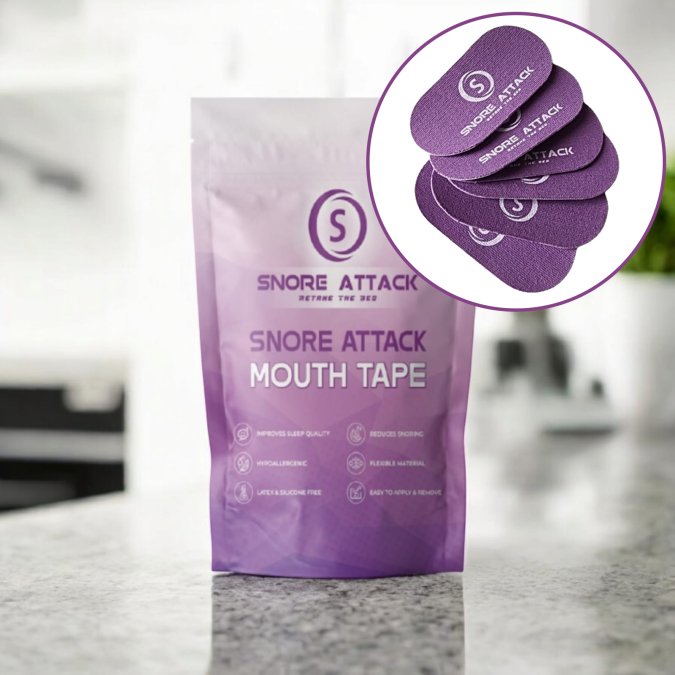
Follow these steps every morning:
- Warm the adhesive. Press a warm, damp cloth over the tape for 10 to 15 seconds.
- Loosen one corner. Work a fingernail under the edge, do not pull the centre.
- Peel slowly, low and parallel. Keep the tape close to your skin as you ease it off.
- Support the skin. Hold your skin steady with one hand while peeling with the other.
- Clean gently. Rinse with lukewarm water. Skip harsh soaps and scrubbing.
- Let skin breathe. Give your skin a few hours tape-free before your next use.
If you have facial hair, peel even slower. Hair adds resistance, and resistance is what tugs skin.
Mouth Tape Rash vs Mouth Tape Allergic Reaction
A mouth tape rash and a mouth tape allergic reaction look similar but need different responses. Most irritation is a rash from friction, moisture or removal. A true allergy is far less common.
Here is how to tell them apart:
| Sign | Irritant Rash | Allergic Reaction |
|---|---|---|
| Where it appears | Only where tape touched | Often spreads beyond the tape line |
| Timing | Builds over days | Can appear within hours |
| Look | Red, dry, slightly sore | Itchy, bumpy, swollen or weeping |
| Sensation | Mild tenderness | Intense itch or burning |
| Response | Improves once you change method | Needs the tape removed and a doctor's advice |
Irritant rashes settle once you fix the trigger. Allergic reactions tend to get worse with each exposure.
Spotting a True Mouth Tape Allergic Reaction
Watch for swelling, spreading redness, blisters or intense itching that starts soon after you apply tape. These point to an allergy rather than simple friction.
If you notice any of these, stop using the tape. Seek advice from a pharmacist or your doctor, especially if swelling affects your lips, tongue or breathing.
Never push through a suspected allergic reaction to "toughen up" your skin. It does not work that way.
What to Do When Irritation Is Already There
Stop taping the irritated area and let your skin recover first. Taping over broken skin makes everything worse and slows healing.
Then work through this plan:
- Take a break. Give skin two to three nights tape-free.
- Keep it clean and dry. Lukewarm water only, then pat gently.
- Skip the actives. No exfoliants, acids or strong creams on the area.
- Try a barrier cream. A plain, fragrance-free ointment can soothe raw skin.
- Change one thing at a time. New tape, lighter tension, slower removal.
- Patch test first. Try a small piece on your forearm for a night before full use.
If irritation keeps returning, or you have a diagnosed sleep condition such as obstructive sleep apnoea, speak with your doctor before continuing. Mouth tape supports comfort and nasal breathing, but it is not a treatment for sleep apnoea.
Once your skin has settled, restart slowly. Use a hypoallergenic tape, apply it lightly, and remove it gently. Most people find a routine that works within a week or two.
Frequently Asked Questions
Can mouth tape cause skin irritation or a rash?
Yes, it can. Most reactions come from adhesive residue, pulling the tape off too fast, or skin that is damp or oily when the tape goes on. A mild mouth tape rash usually shows as redness, dryness or slight itching around the lips and fades within a day or two once you stop using the tape. Switching to a gentler adhesive and improving how you apply and remove it typically clears the problem. If redness spreads or blisters, stop and speak to a pharmacist or GP.
What does an allergic reaction to mouth tape look like?
A true mouth tape allergic reaction is different from simple irritation. It tends to appear as raised, bumpy or weeping skin, often spreading beyond the exact area the tape touched, and it can feel hot or intensely itchy. Symptoms may build over several nights rather than appearing immediately. If you suspect this, stop using the tape straight away, keep the area clean and dry, and see a pharmacist or GP. Do not try another brand until the skin has fully settled.
How can I remove mouth tape without irritating my skin?
Warm the adhesive first. Press a warm, damp cloth against the tape for 20 to 30 seconds, then peel slowly from one corner, keeping the tape flat against the skin rather than pulling upwards. Support the skin with your other hand as you go. Once the tape is off, rinse with lukewarm water and pat dry. A fragrance-free moisturiser helps restore the skin barrier. Rushing the removal is the single biggest cause of soreness, so take the extra minute.
Can I use mouth tape if I have sensitive skin?
Often yes, with the right product. Look for tape described as hypoallergenic and gentle to remove, and avoid anything with strong fragrances or harsh adhesives. Snore Attack Mouth Tape is hypoallergenic and designed to come away gently, even if you have a beard or moustache. Patch-test a small piece on your forearm for 24 hours before wearing it overnight. Keep your skin clean, dry and free of heavy moisturiser before applying, and give your skin a night off if any redness appears.
Skin irritation is one of the few real barriers to comfortable mouth taping, but it is almost always fixable with the right tape and a gentler routine. At Snore Attack, we built our mouth tape to be hypoallergenic and gentle to remove, even with facial hair, so sensitive skin is not a dealbreaker. Pair it with our Shield and Nasal Cones for a full night-time routine, and shop the range to find your fit.