

Last Updated: October 30, 2026
Not everyone who snores needs a dental appliance. For many people, snoring comes from things that can be changed at home: sleeping position, a blocked nose, mouth breathing or evening alcohol. Working through these one at a time is a sensible first step before looking at a custom-made device.
Why snoring happens
Snoring is the sound of the soft tissues at the back of the throat vibrating as air passes through a narrowed airway. It tends to be worse when:
- you sleep on your back
- your nose is blocked or narrow
- your mouth falls open during sleep
- you've had alcohol in the evening
- you carry extra weight around the neck
Most people snore for more than one of these reasons, so it helps to look at each one.
Sleep on your side
On your back, the jaw and tongue fall back towards the throat and narrow the airway. Side sleeping keeps the airway more open. A pillow wedged behind your back, or a body pillow to hug, makes it harder to roll over during the night.
Pillow height matters too. Choose one that keeps your neck in line with your spine, so your head isn't bent forward or dropping back. Raising the head of the bed slightly can also help some people.
Cut back on evening alcohol
Alcohol relaxes the muscles that hold the airway open, so snoring is often louder after a few drinks. Avoiding alcohol in the hours before bed is one of the simplest changes you can make. Some sleeping tablets and sedating medicines have a similar effect, so it is worth asking your GP or pharmacist about any regular medication.
Keep your nose clear
When the nose is blocked or narrow, breathing through it takes effort, so the mouth falls open and snoring gets louder. If your nose is blocked from a cold or hay fever, a saline rinse can help. Decongestant sprays should only be used for a few days at a time.
The Snore Attack Magnetic Nasal Clips gently support the sides of the nose to make nasal breathing easier. A small magnetic adhesive strip goes on the outside of the nose, and a reusable clip attaches to it. The Starter Pack includes four clip sizes so you can find a comfortable fit, plus adhesive strips and a storage case.
Apply the strip to clean, dry skin and stop using it if irritation develops. Keep the magnets away from pacemakers and other implanted devices, and away from small children.
If your nose is blocked most of the time, not just during a cold or hay fever, see your GP, who may refer you to an ENT specialist.
Shop the Snore Attack Magnetic Nasal Clips →
Keep your mouth closed
When the mouth falls open during sleep, the jaw drops and the tongue moves back, narrowing the airway. Snore Attack Mouth Tape keeps the lips gently closed so you breathe through your nose. It is hypoallergenic and gentle to remove, even over a beard or moustache.
How to use it:
- Check you can breathe comfortably through your nose.
- Make sure your lips are clean and dry, with no lip balm.
- Place the strip across the centre of your lips.
- In the morning, peel it off slowly from one corner.
Only use mouth tape when your nose is clear. Don't use it with a blocked nose, if you feel nauseous, after alcohol or sedatives, or on broken skin or cold sores, and it is not suitable for children. If you use CPAP, check with your sleep clinician first. If you use a mandibular advancement splint, put the splint in first, then apply the tape. Always read the label and follow the directions for use.
Shop Snore Attack Mouth Tape →
Support tongue position
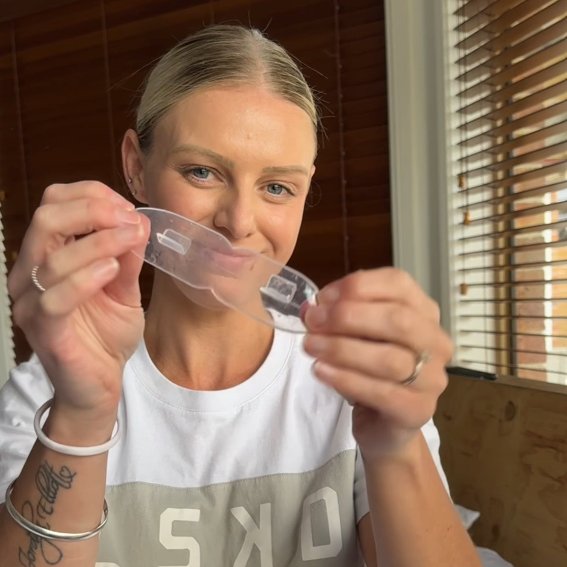
For some people, snoring comes from the tongue falling back during sleep. The Snore Attack Shield positions the tongue against the roof of the mouth and encourages a closed-mouth posture. It is designed to be used with the mouth tape and nasal clips.
Shop the Snore Attack Shield →
Look at weight and fitness
Extra weight, particularly around the neck, narrows the airway. Losing even a moderate amount of weight can reduce snoring. Your GP can help with a plan that suits you.
When a dental device may still be the answer
If snoring continues after you've worked through these changes, a mandibular advancement splint may be worth discussing with your dentist. It is a custom-made appliance that holds the lower jaw slightly forward during sleep to help keep the airway open. A dentist needs to assess whether it suits you.
When snoring needs a closer look
Products that help reduce snoring are not a treatment for sleep apnoea. Consider a sleep study if you or your partner notice:
- pauses in breathing, followed by gasping or choking
- heavy daytime sleepiness, even after a full night in bed
- waking with headaches
- high blood pressure that is hard to control
Aer Healthcare arranges home sleep studies across Australia, with results reported by a sleep physician.
Find out more about a home sleep studyhttps://www.snoringtreatment.com.au
Frequently Asked Questions
How can I stop snoring without a dental device?
Start with the free changes: sleep on your side and avoid alcohol in the hours before bed. Then look at whether a blocked nose or mouth breathing is involved, and try nasal clips or mouth tape to suit.
Does sleeping on my side help with snoring?
It can. On your back, the jaw and tongue fall back towards the throat. Side sleeping keeps the airway more open, and a pillow behind your back helps you stay there.
Can a blocked nose make snoring worse?
Yes. A blocked nose makes you breathe through your mouth, and the jaw drops and the tongue falls back. Clearing the nose and supporting it with nasal clips can help.
Can I use mouth tape and nasal clips together?
Yes. The clips help keep the nose open and the tape keeps the lips closed, so you keep breathing through your nose. Only use mouth tape when your nose is clear.
