

Last Updated: September 26, 2026
Most poor nights are not a mystery. Your body clock, your bedroom and what is on your mind all affect how quickly you fall asleep and how well you stay asleep. The seven steps below are simple, and most can be started tonight.
Step 1: Fix your wake time
A consistent wake time is the strongest anchor for your body clock. Pick a time you can keep seven days a week, including weekends, and work backwards to a bedtime that gives you seven to nine hours in bed.
- Get outside into daylight within 30 minutes of waking.
- Avoid long sleep-ins after a bad night. They make the next night harder.
- Keep your wake time fixed and your bedtime will settle within a few days.
Step 2: Make your bedroom cool, dark and quiet
Your core body temperature needs to drop slightly for you to fall asleep, so a room that is too warm keeps you awake. Most people sleep best at around 17–19°C.
- Temperature: use lighter bedding and a fan if needed. A warm shower 1–2 hours before bed also helps, as your body cools afterwards.
- Light: block it with blackout curtains or an eye mask, and cover standby lights.
- Noise: steady background sound, such as a fan or white noise, masks the sudden noises that disturb sleep. Earplugs also work.
A quick check before bed: lie on your pillow and look around. Fix anything that is bright, warm or noisy from that spot.
Step 3: Time your caffeine, alcohol and food
- Caffeine: it stays in your system for many hours, so have your last coffee, tea, cola or energy drink by early afternoon.
- Alcohol: it may help you nod off, but it breaks up sleep later in the night and makes snoring worse.
- Food: finish large meals two to three hours before bed.
Step 4: Dim the lights and screens in the last hour
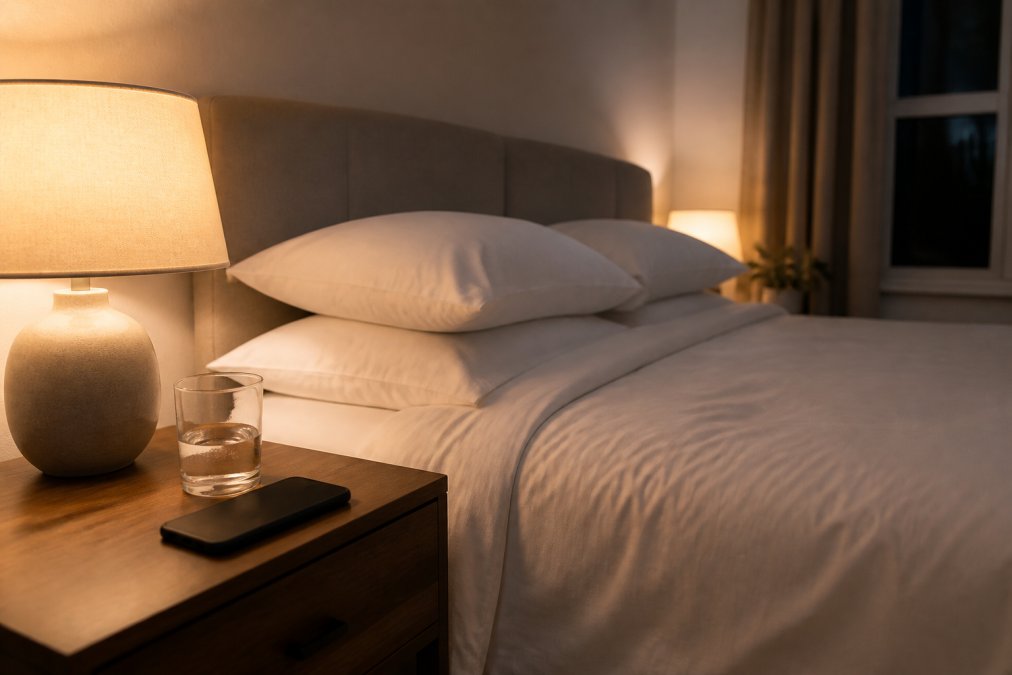
Bright light in the evening tells your brain it is still daytime. In the final hour before bed, switch to lamps instead of overhead lights and turn screens down. Scrolling also keeps your mind switched on, so charge your phone away from the bed.
Step 5: Give a busy mind something to do
Telling yourself to relax rarely works. Giving your mind a simple task does. Try one of these for at least ten minutes:
- Slow breathing: breathe in through your nose for four counts and out for six. The longer out-breath slows your heart rate.
- Body scan: starting at your feet, notice how each part of your body feels, without trying to change it.
- Cognitive shuffle: pick a neutral word, such as 'garden', and for each letter picture unrelated objects starting with that letter.
- Worry list: keep a notepad by the bed. Jot down anything on your mind so you can deal with it in the morning.
Step 6: Get up if you can't sleep
- If you have been awake for around 20 minutes, get up. Go to another room, keep the lights low and do something quiet and dull until you feel sleepy, then go back to bed. Lying in bed frustrated teaches your brain that bed is a place for being awake.
Step 7: Deal with snoring
Snoring disturbs your own sleep as well as your partner's. Some simple changes can help tonight:
- Sleep on your side rather than your back.
- Avoid alcohol in the evening.
- Clear a blocked nose. Snore Attack Magnetic Nasal Clips gently support the sides of the nose to make nasal breathing easier.
- If you breathe through your mouth, Snore Attack Mouth Tape keeps your lips closed so you breathe through your nose. Only use it if your nose is clear.
- If your tongue tends to fall back, the Snore Attack Shield encourages it to rest against the roof of your mouth.
When to see your doctor
See your GP if poor sleep has lasted more than a few weeks and is affecting your days. Cognitive behavioural therapy for insomnia (CBT-I) is the recommended first treatment for long-term insomnia and works better over time than sleeping tablets.
Also see your GP about a sleep study if your snoring comes with gasping, choking or pauses in breathing, or you are tired during the day despite a full night in bed. These can be signs of obstructive sleep apnoea, which is common and very treatable.
More information: Healthdirect (healthdirect.gov.au) and the Sleep Health Foundation (sleephealthfoundation.org.au).
Frequently Asked Questions
How can I fall asleep faster tonight?
Dim the lights an hour before bed, keep your room cool, put your phone away and try slow breathing (in for four, out for six) once you are in bed. If you are still awake after about 20 minutes, get up and do something quiet until you feel sleepy.
When should I stop drinking caffeine?
Most people do best with no caffeine after early afternoon, around 2pm. If you are sensitive to it or struggle with insomnia, stop at midday. Remember tea, cola, energy drinks and chocolate count too.
What is the best room temperature for sleep?
Around 17–19°C suits most adults. A cool room helps your body temperature drop, which is part of falling asleep.
Does snoring affect sleep quality?
Yes. Snoring can break up your sleep without fully waking you, so you wake unrefreshed, and it often disturbs your partner too. Side sleeping, clearing your nose and mouth tape can help. Loud snoring with gasping or pauses in breathing should be checked by your GP.
Should I take melatonin?
Melatonin can help with jet lag and some shift-work problems, but it is not a long-term fix for poor sleep. Try the steps above for two to three weeks first, and speak to your pharmacist or GP before starting any supplement.